From your door, not the station
Search from an address, or to one. The walk at either end is part of the answer.
Every picture here is the app itself, running against the real Swiss timetable — on an Android phone and watch, in a browser, and in the Linux desktop app. Under each one: what it ran on, and when.
Android · 2026-09-08
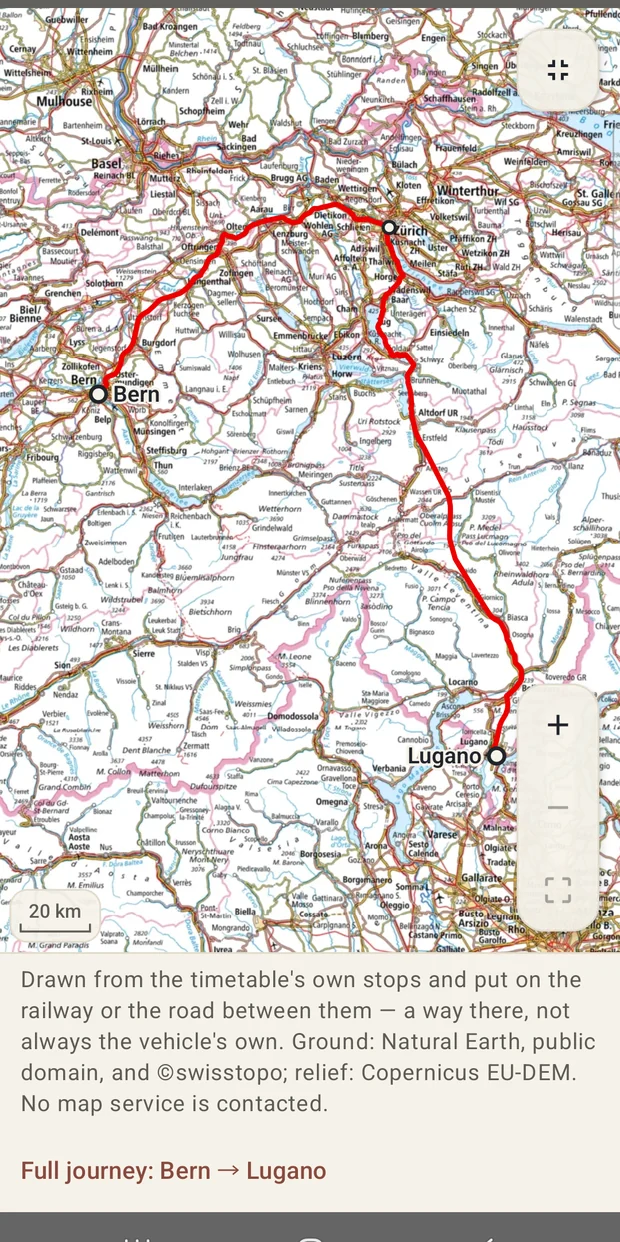
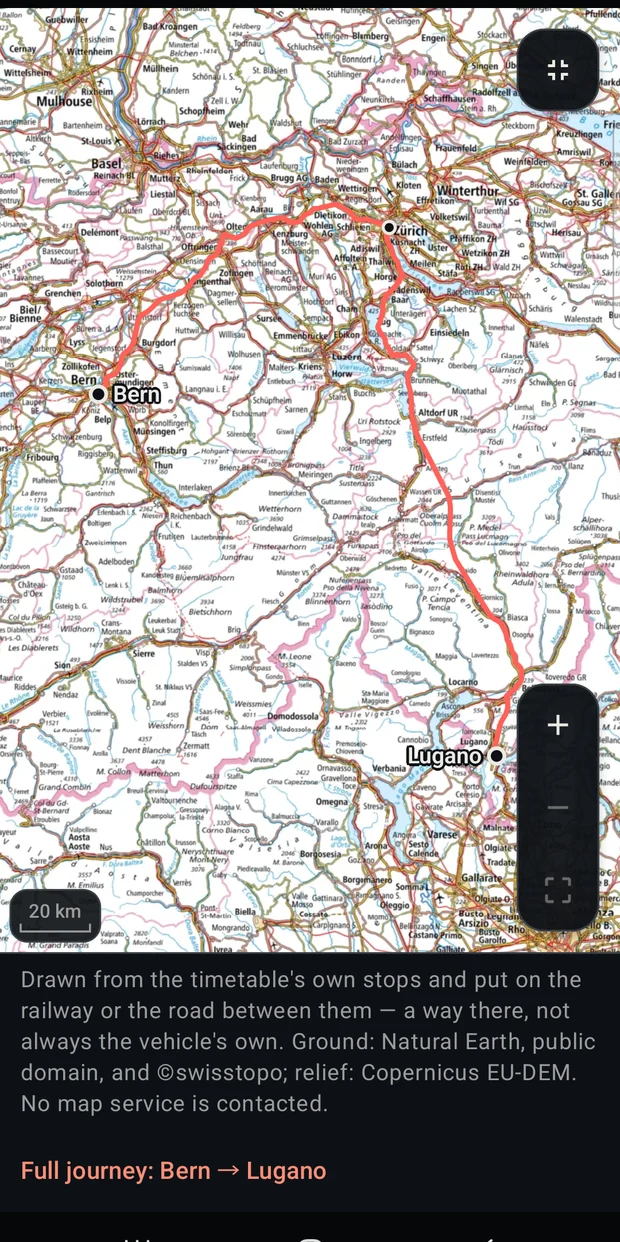
swisstopo’s 1:100 000 map under every journey — optional, and kept on the device.
Android · debug build · 2026-10-08 — Web · Chromium · 2026-10-06
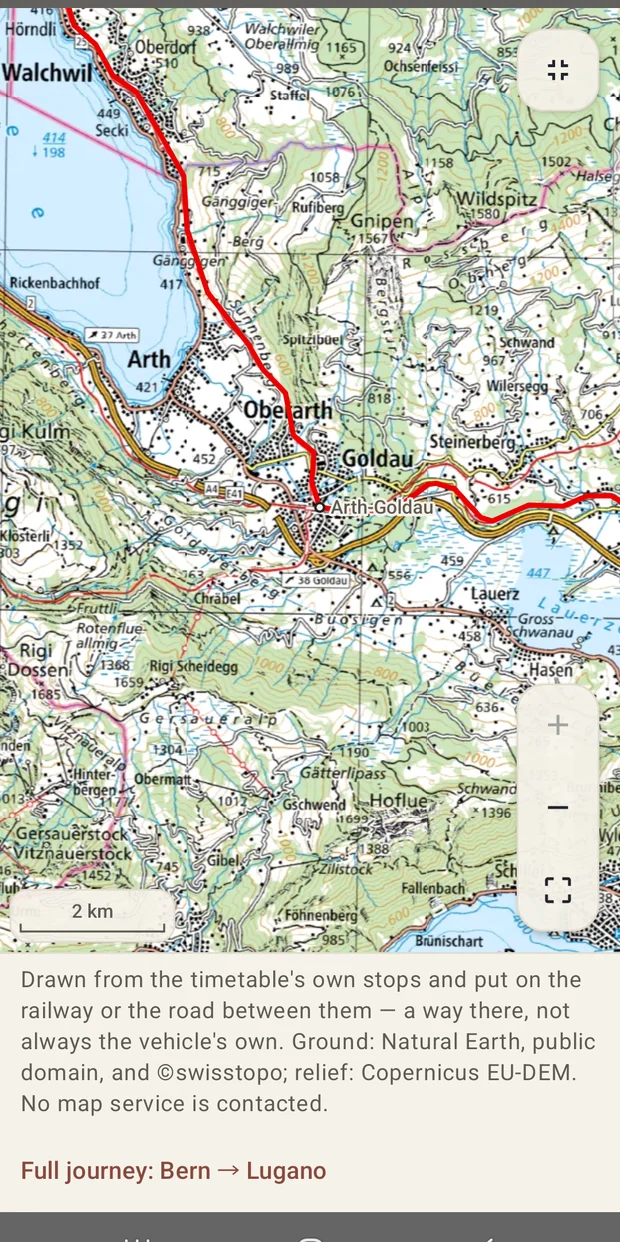
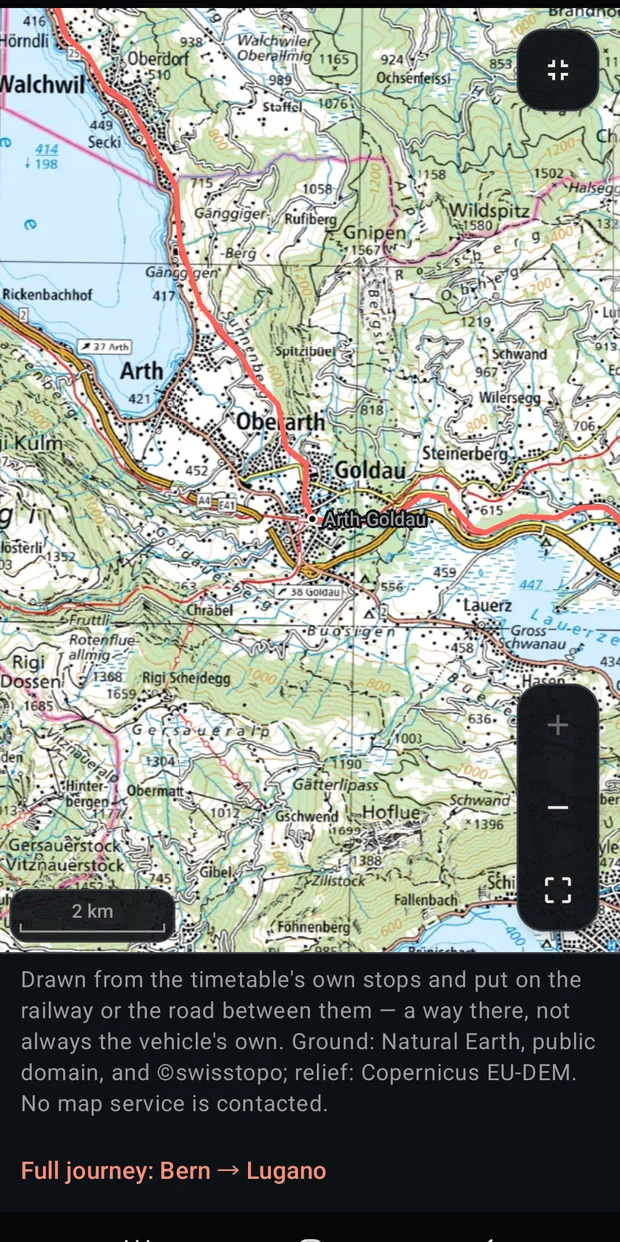
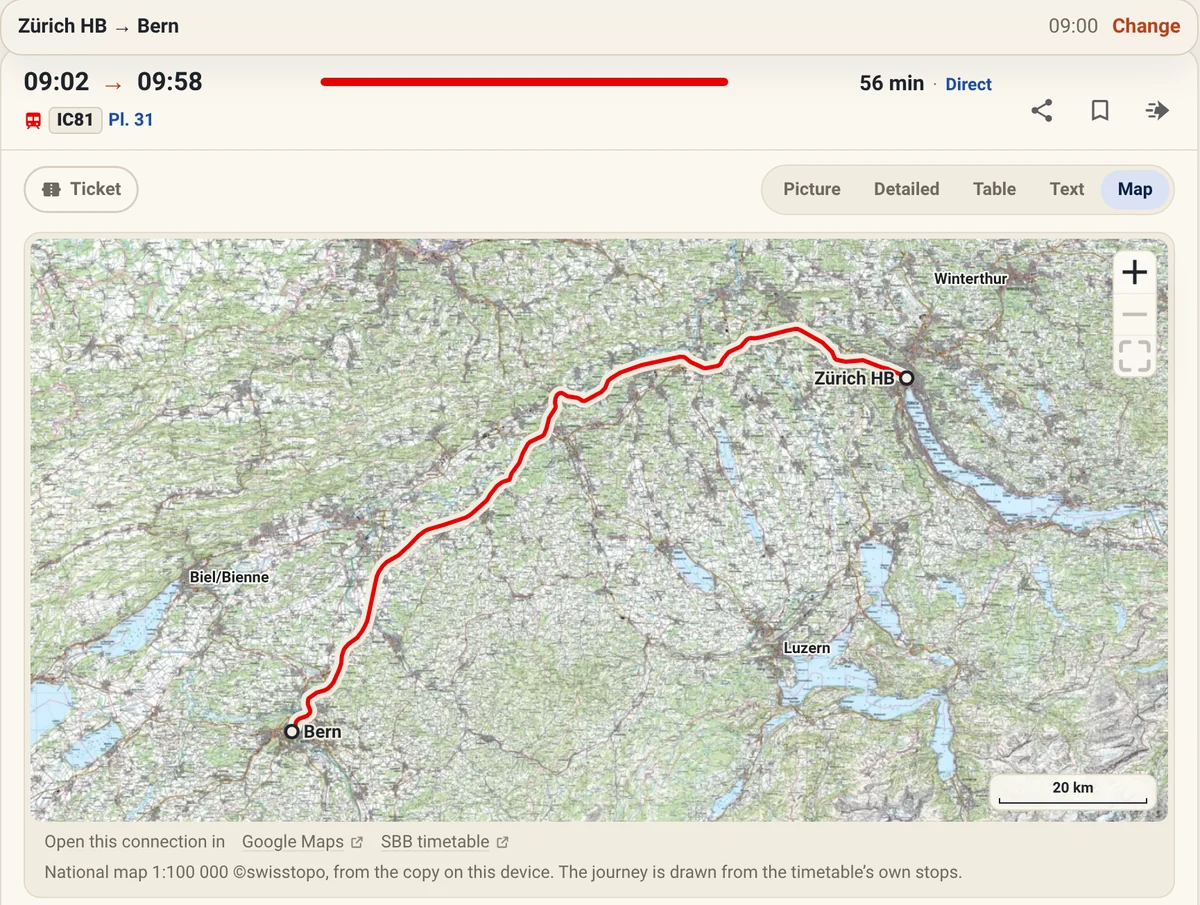
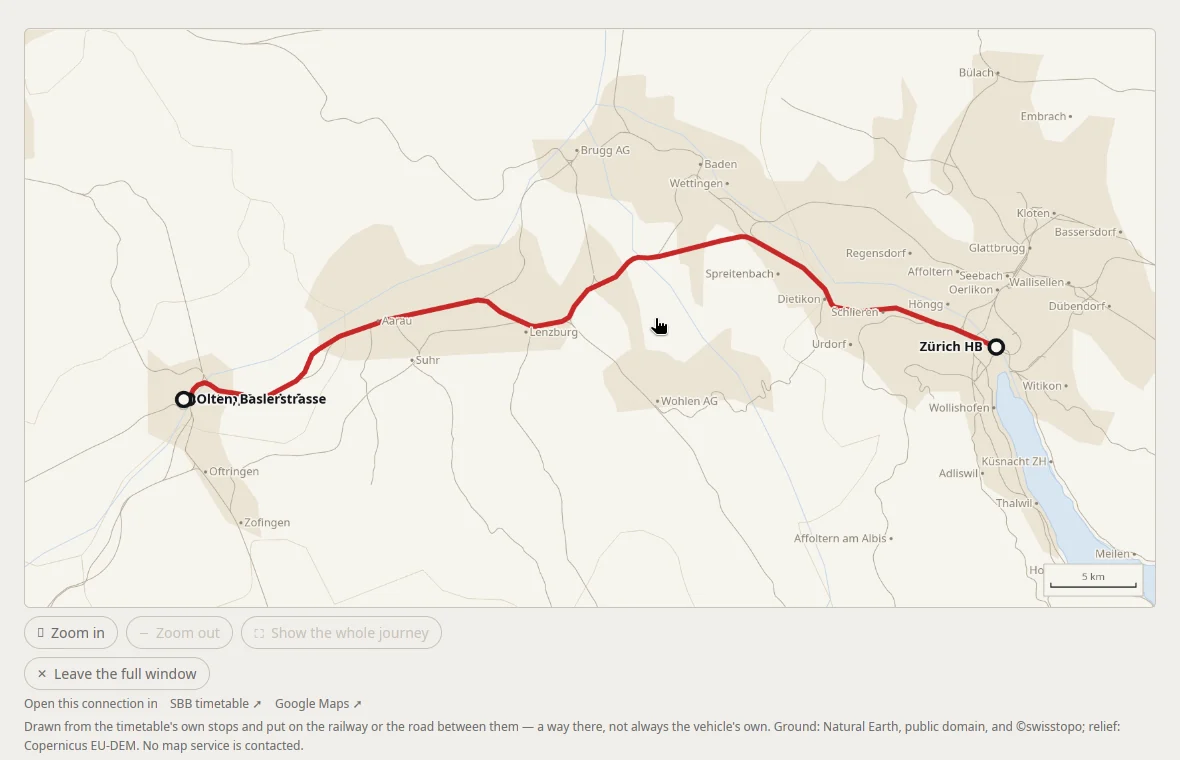
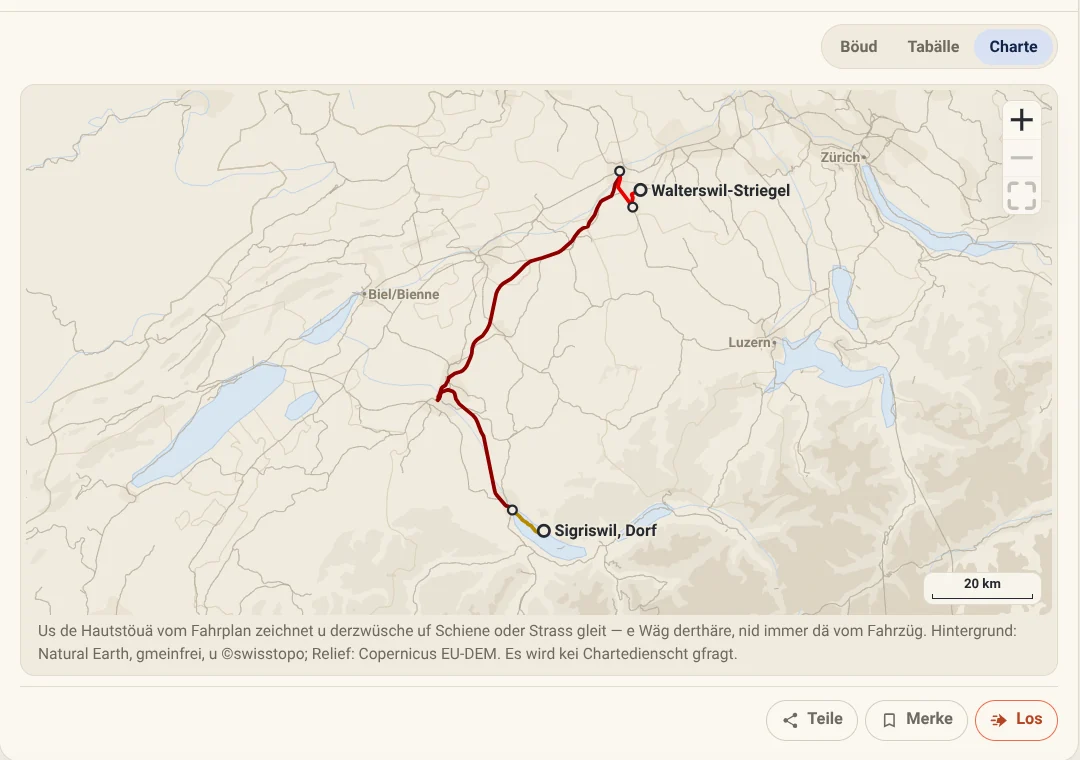
Any connection’s map opens over the whole screen, and a long journey goes closer than a short one — until the ground under it can be read.
Android · debug build · 2026-10-08 — Linux · 2026-10-07
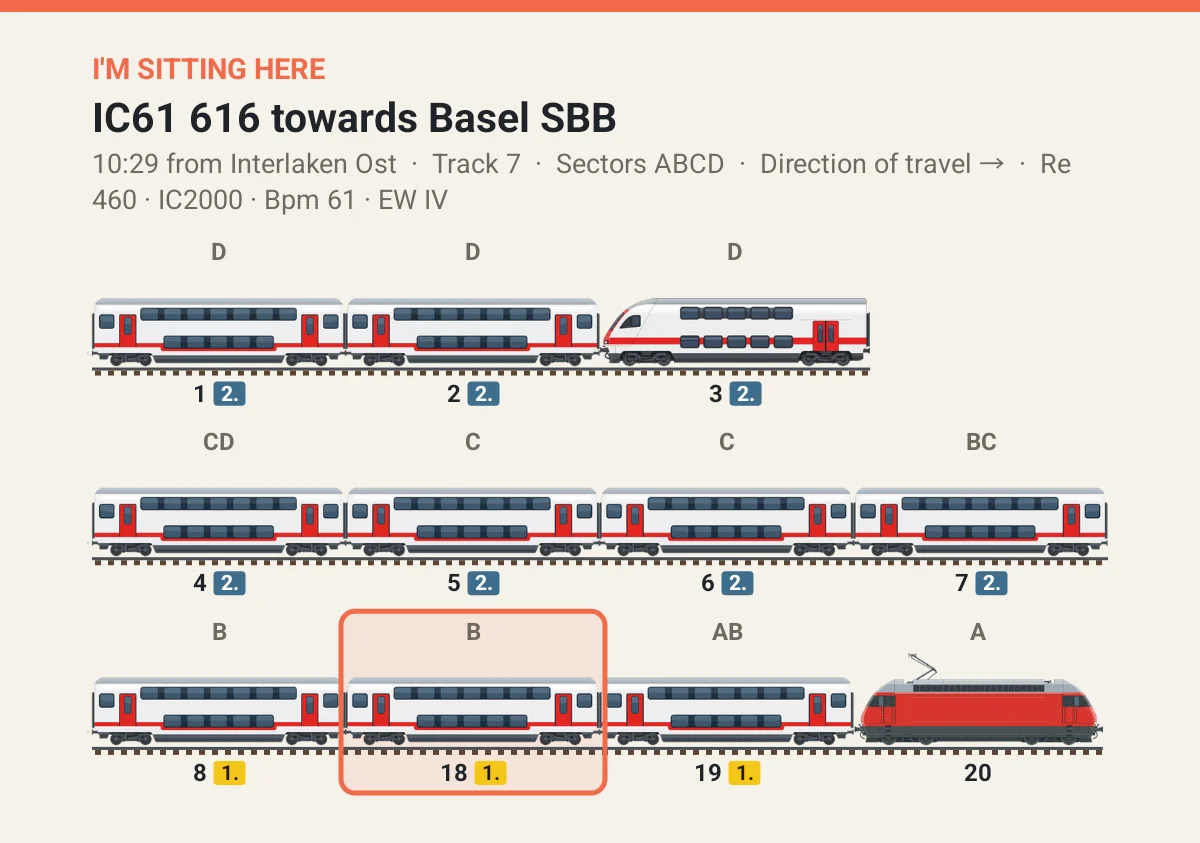
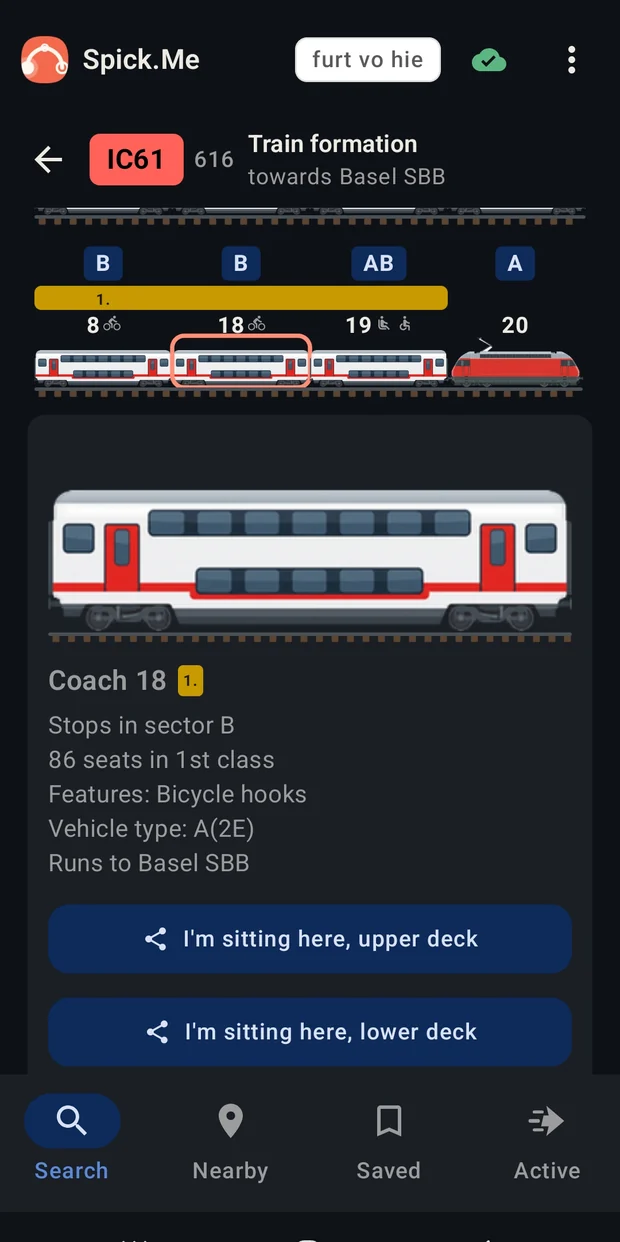
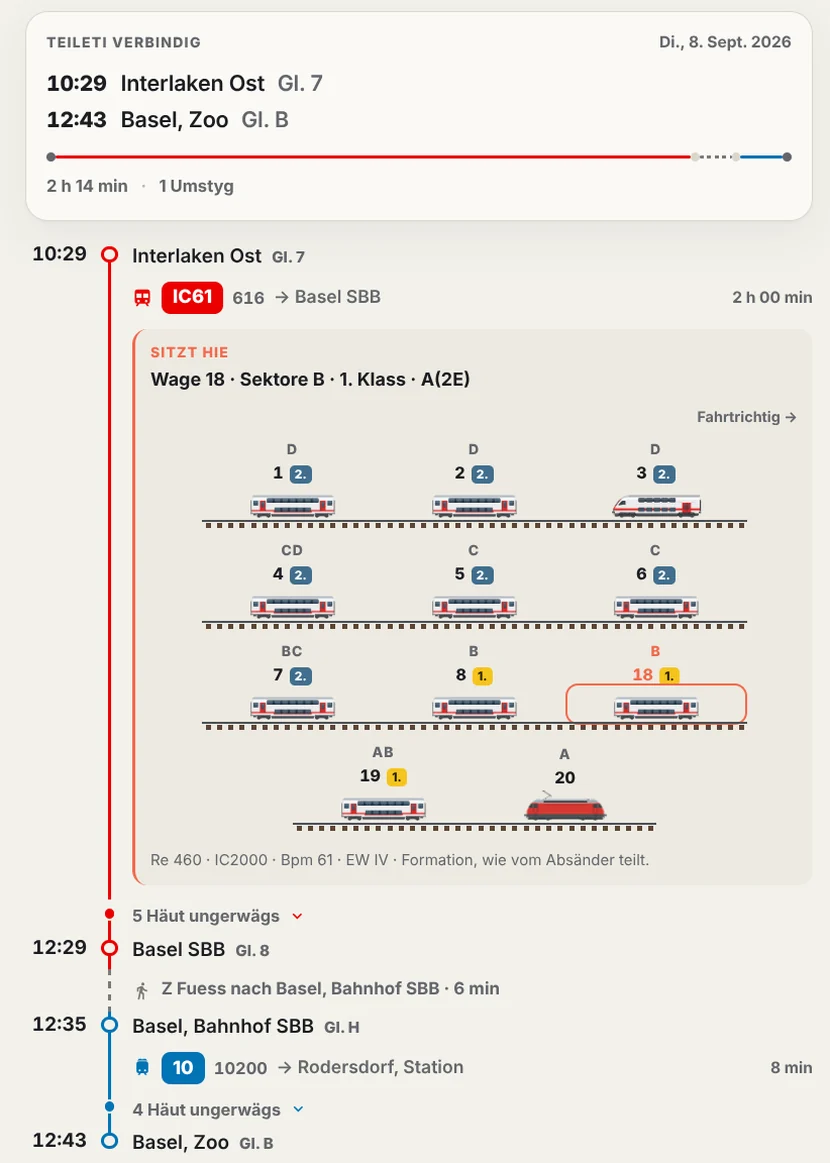
Classes, the dining car, room for a bike, and the sector to wait in — drawn wherever the operator publishes the formation.
Web · 2026-09-08
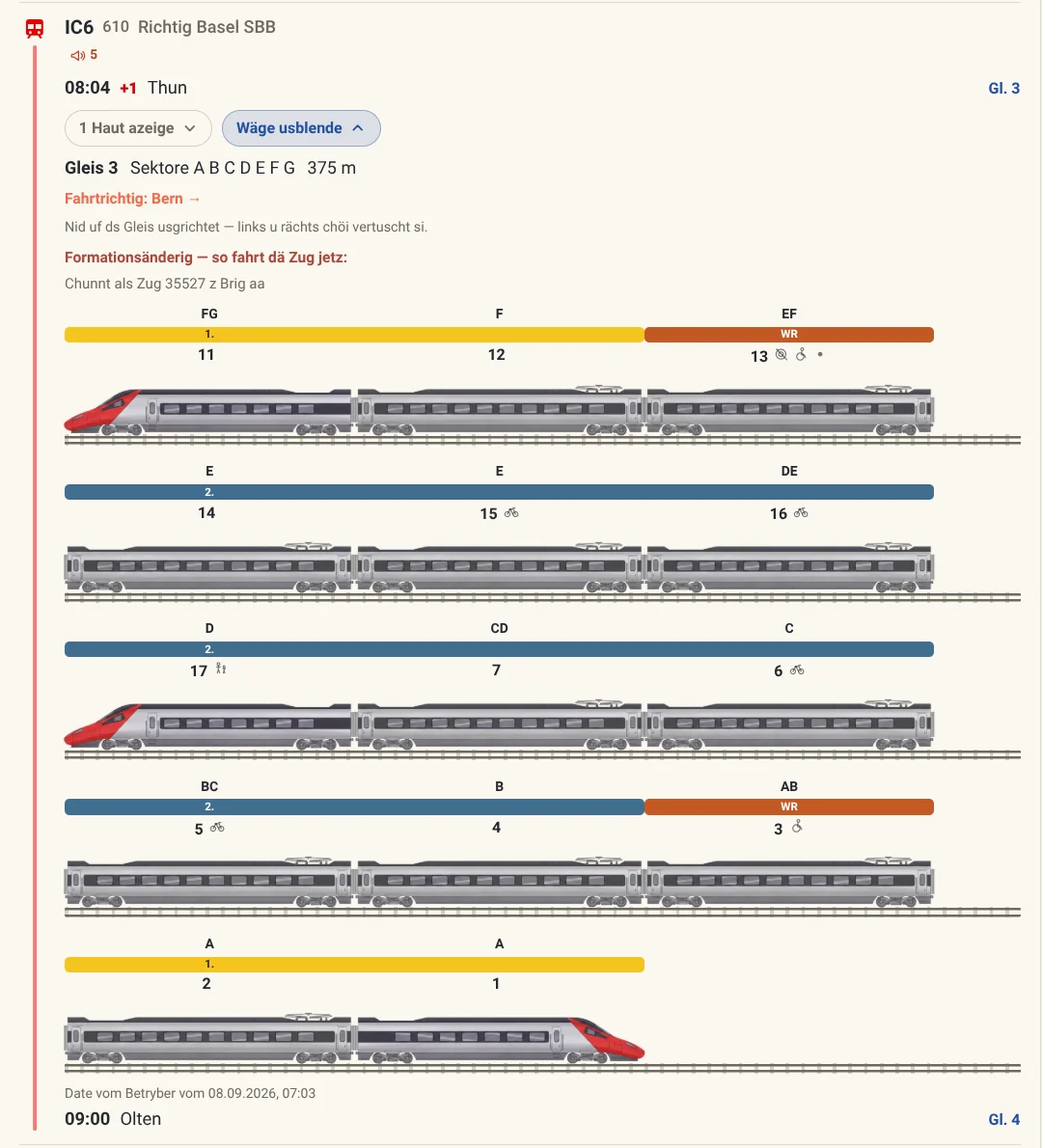
Carriage layout and door side for many trains. Wait at the right end of the platform, not along it.
Android · 2026-09-08
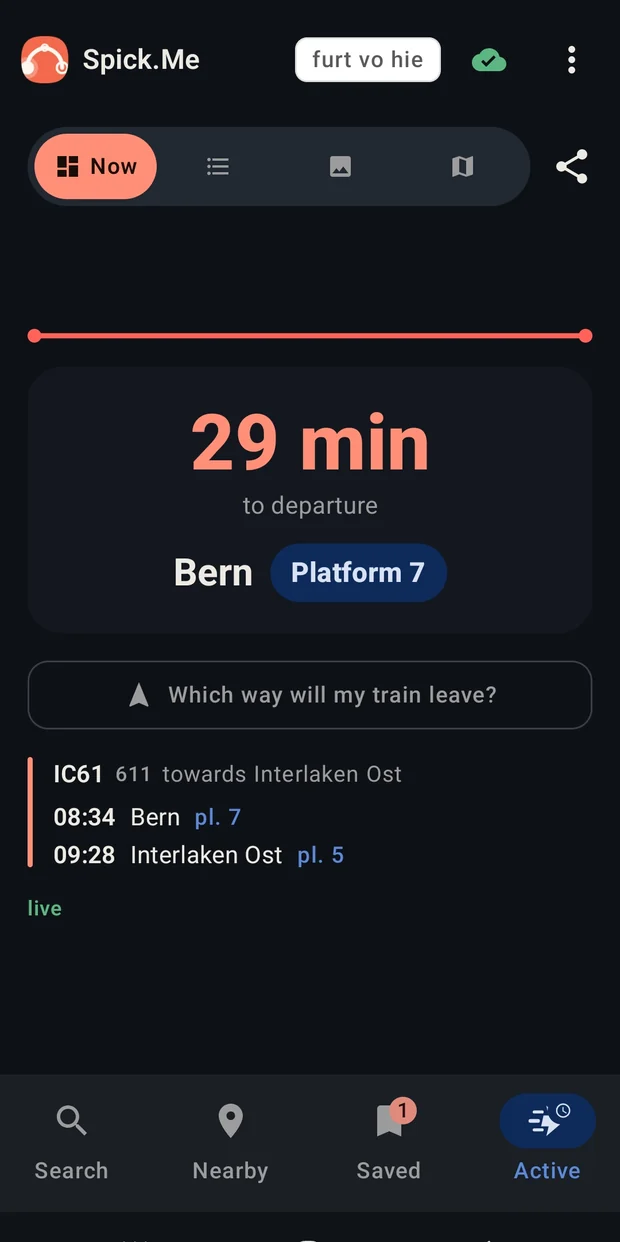
A countdown to the minute you need to head out. No re-reading the timetable.
Android · 2026-09-08
The next platform, and whether you can actually reach it — while the train is still moving.
Android · 2026-09-08
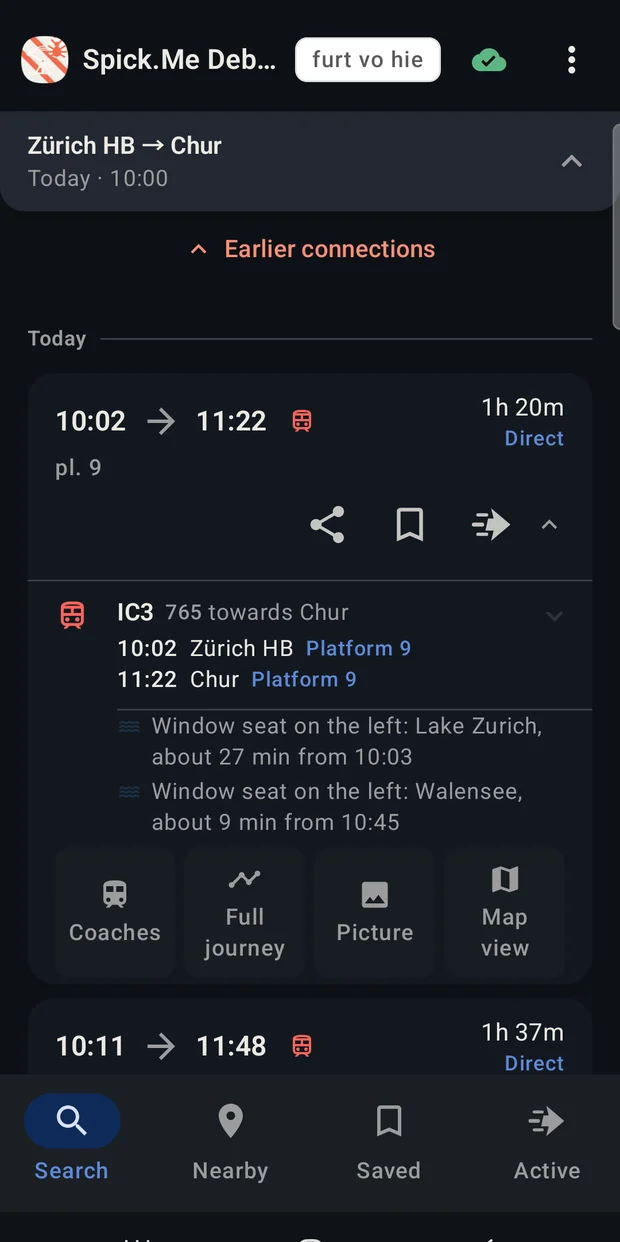
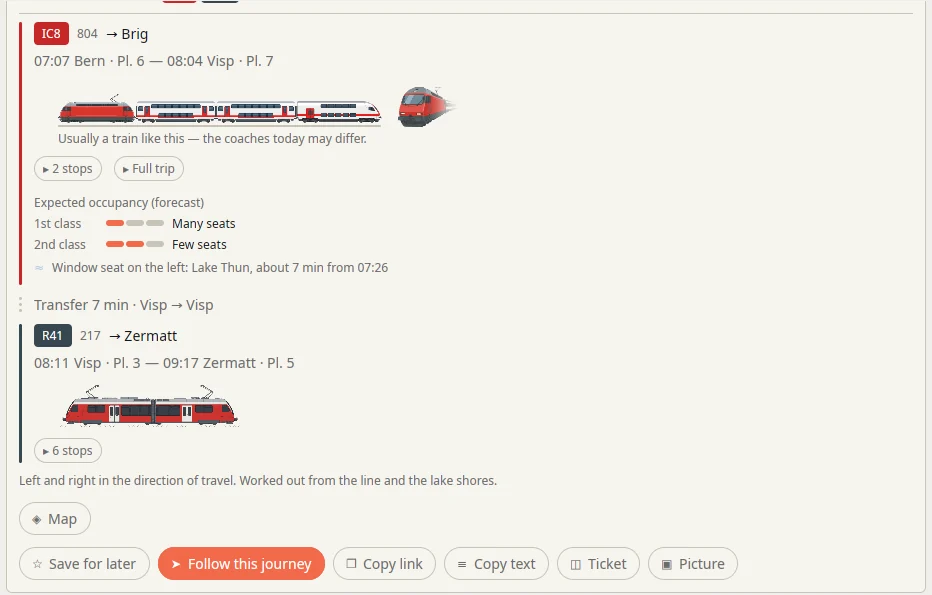
The lakes a line runs along, worked out from the line itself — left or right in the direction of travel, and for how long.
Android · debug build · 2026-10-08 — Web · Chromium · 2026-10-08
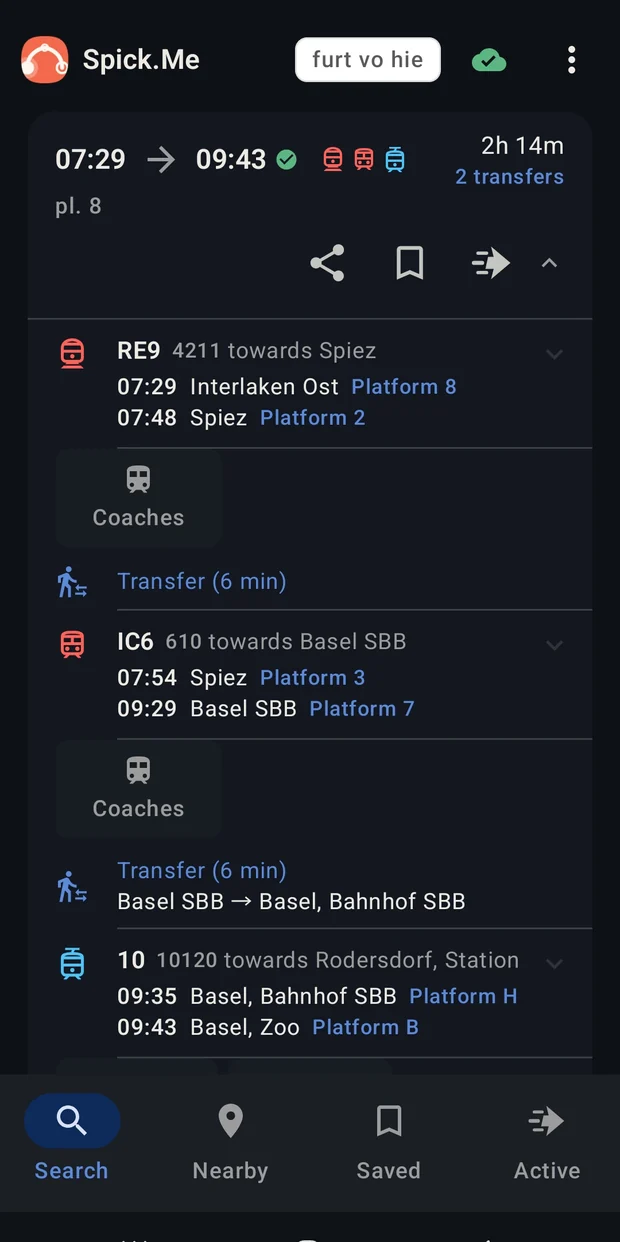
Tell the app how quickly you move and it offers the tighter connections — often a train earlier.
Web · Chromium · 2026-10-06
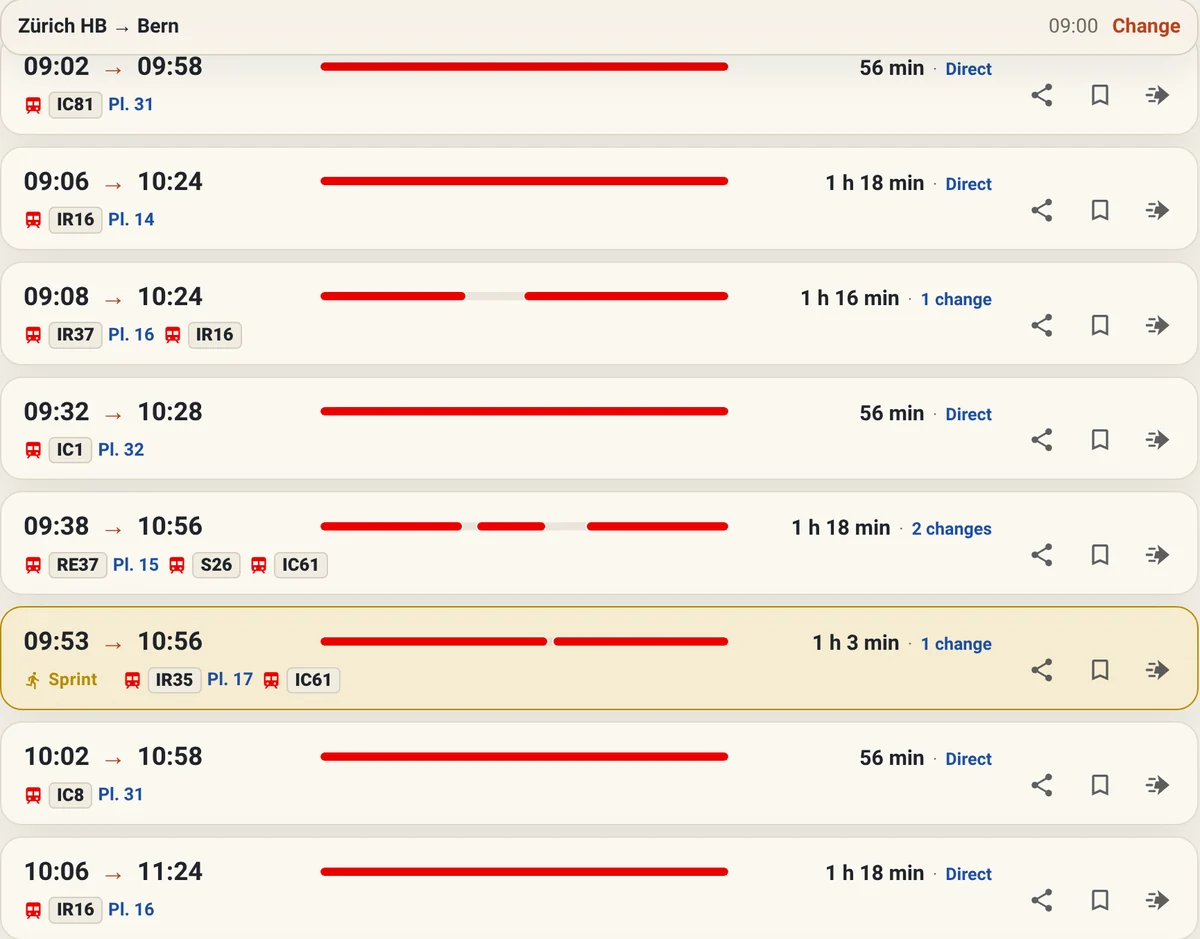
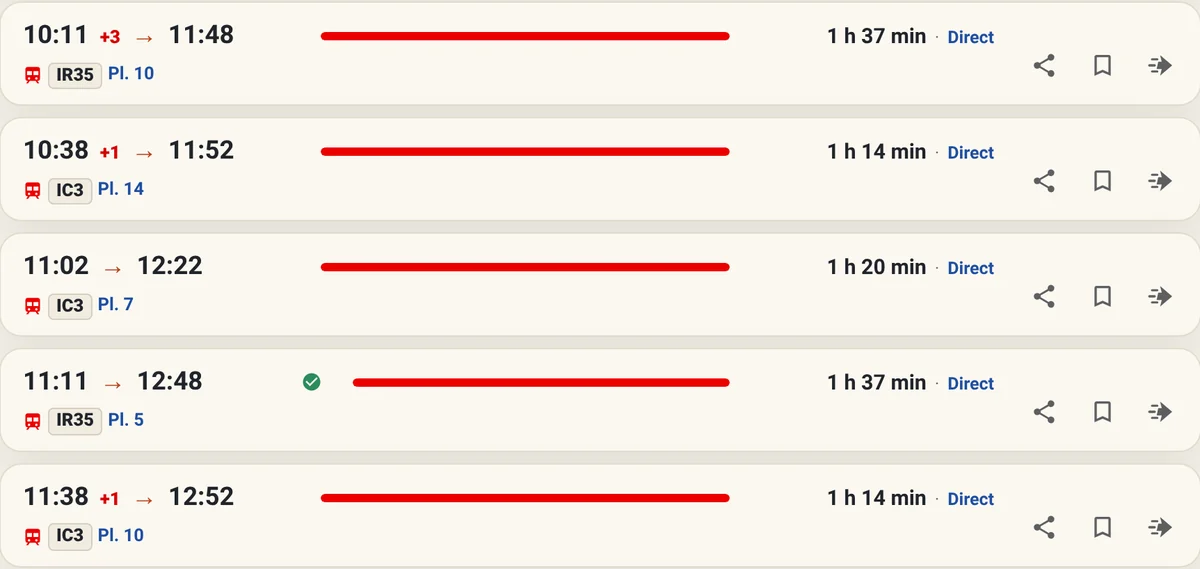
Where real-time data exists, times shift with it. Where it does not, you see the plan — and are told so.
Web · Chromium · 2026-10-08
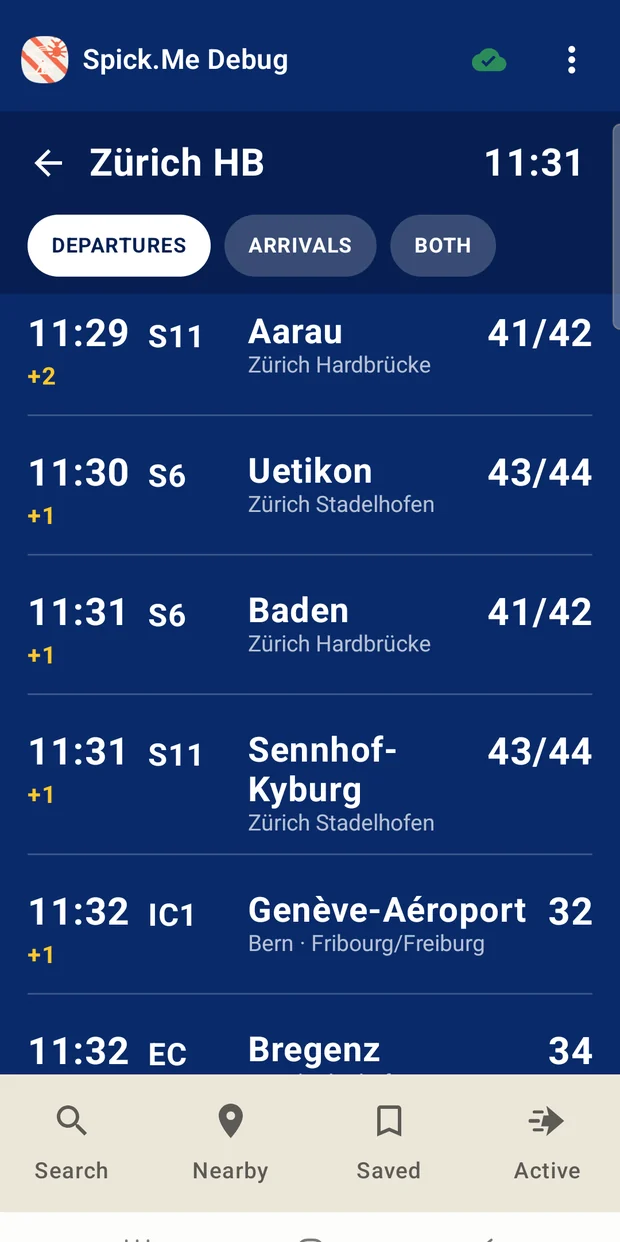
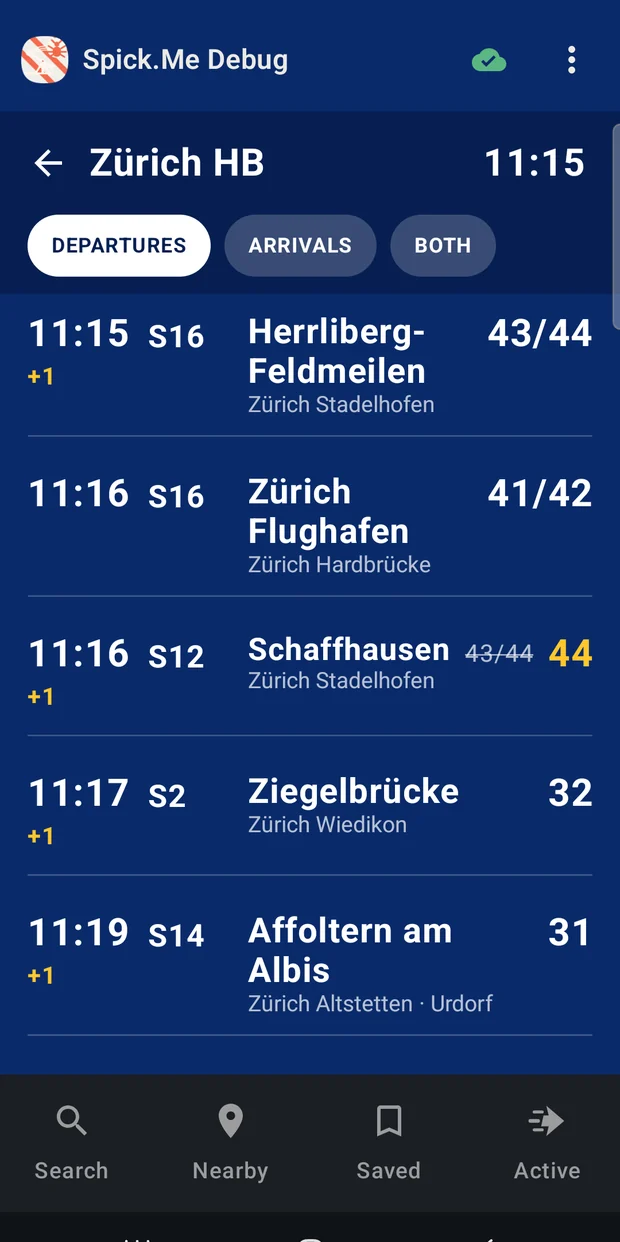
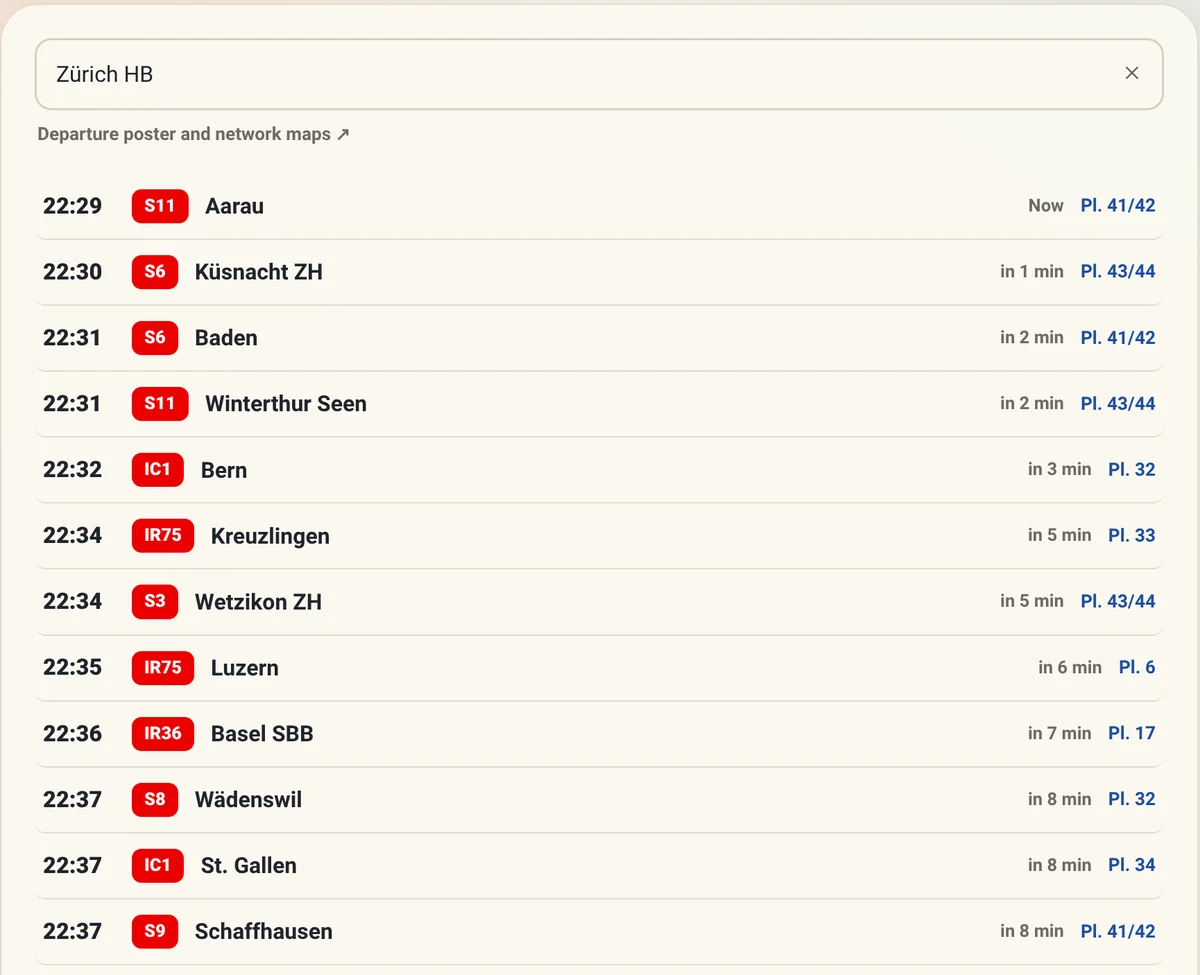
Every stop’s next departures with their platforms — on the phone’s home screen too.
Android · debug build · 2026-10-08 — Web · Chromium · 2026-10-06
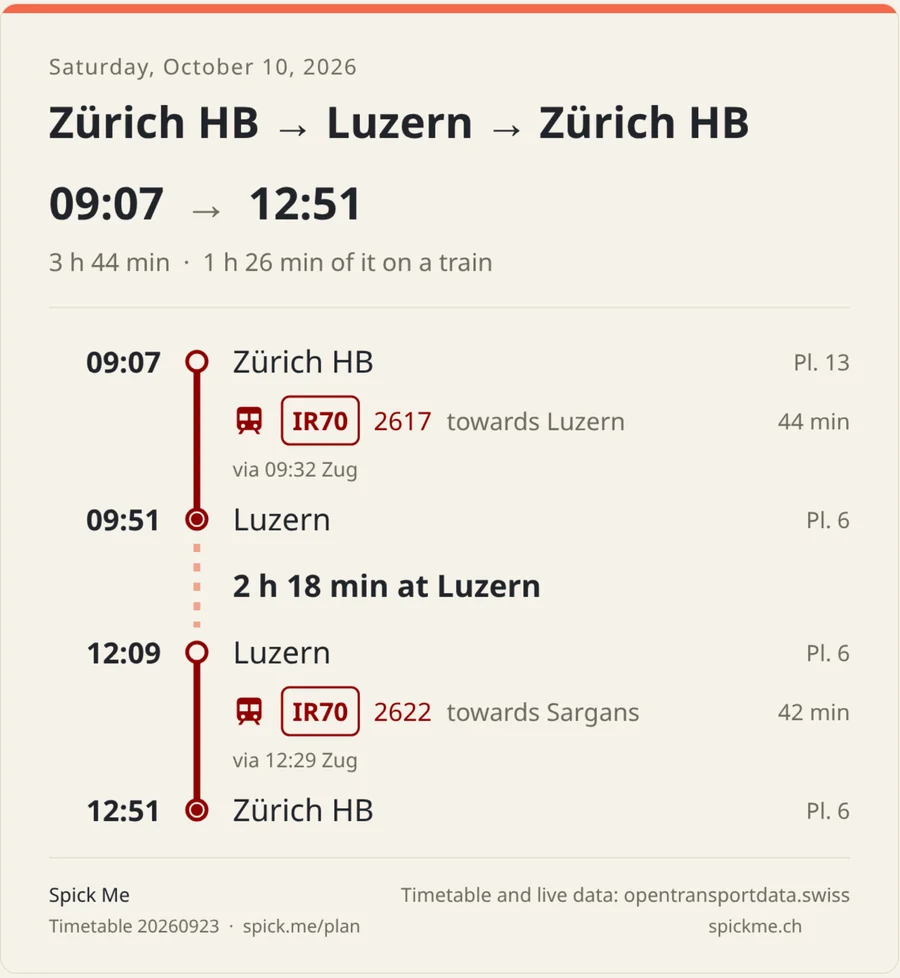
Several places in one day, with as long as you like at each — and the whole day on one picture.
Web · Chromium · 2026-10-06
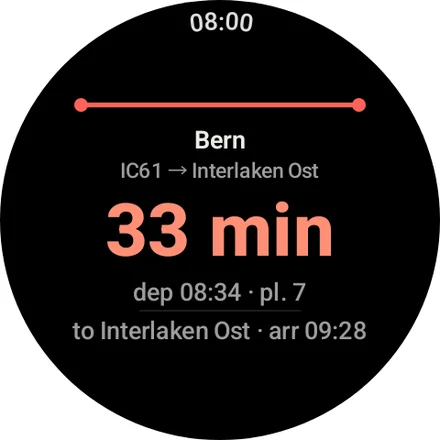
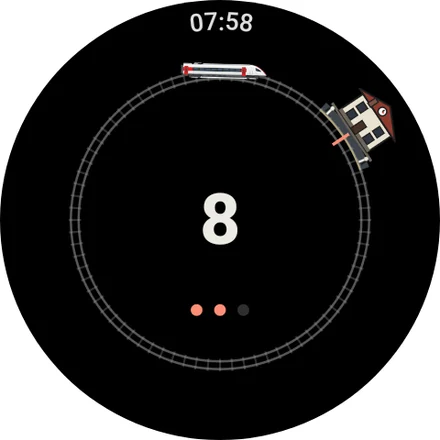
Next stop and countdown on Wear OS, for when the phone stays in the pocket.
Wear OS · 2026-09-04, 2026-09-08
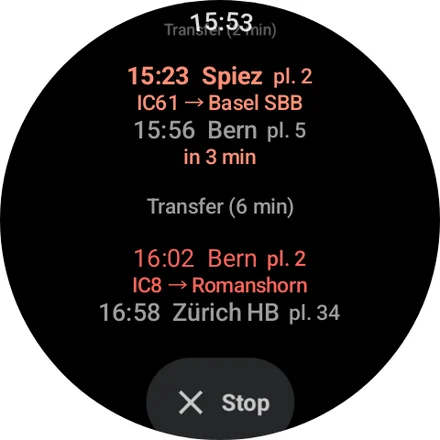
Not a cache of your recent searches. The entire Swiss timetable is preprocessed into one file on your device, so a search in a tunnel or a valley with no bars is the same search as the one at home.
Android · debug build · 2026-10-08
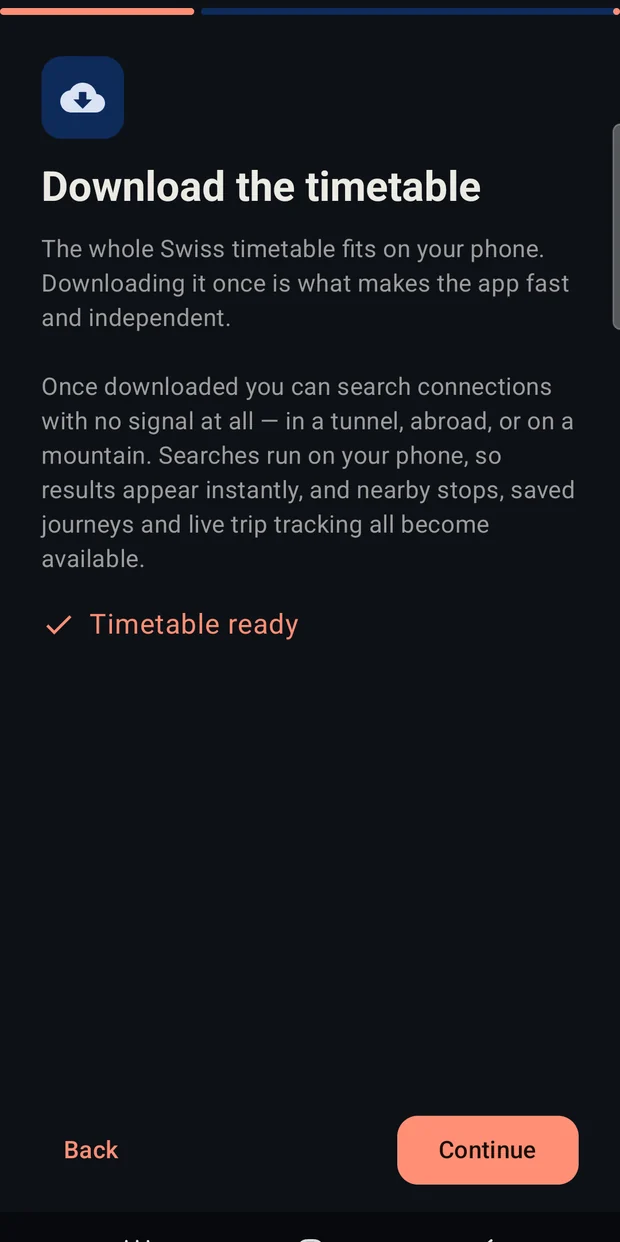
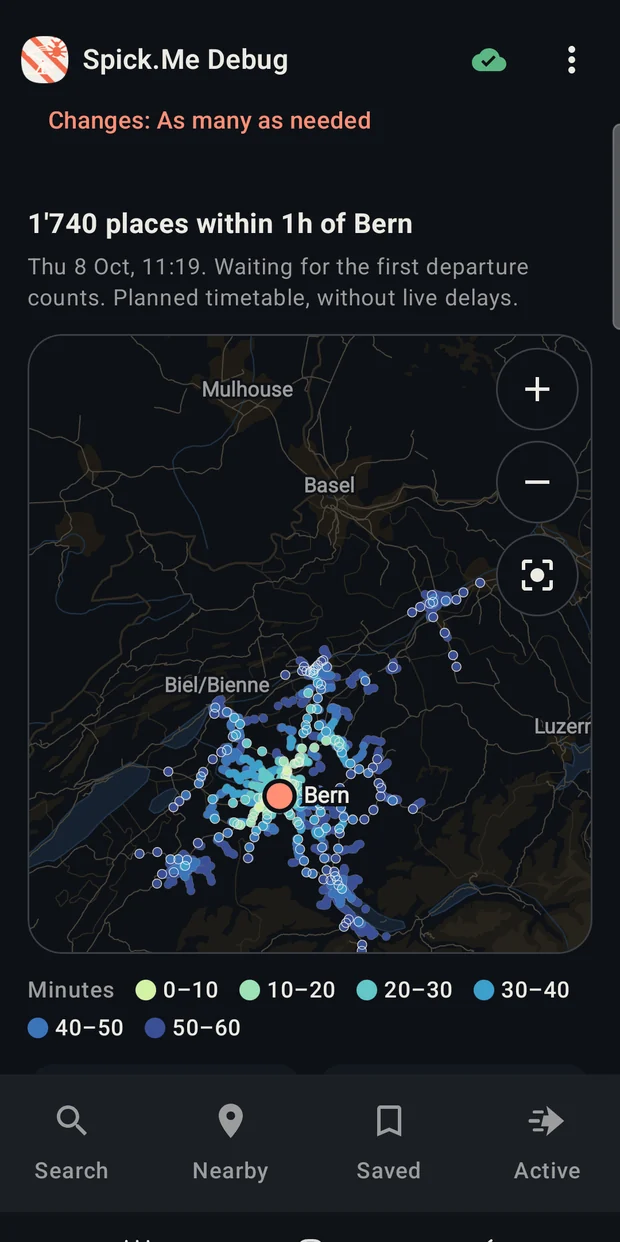
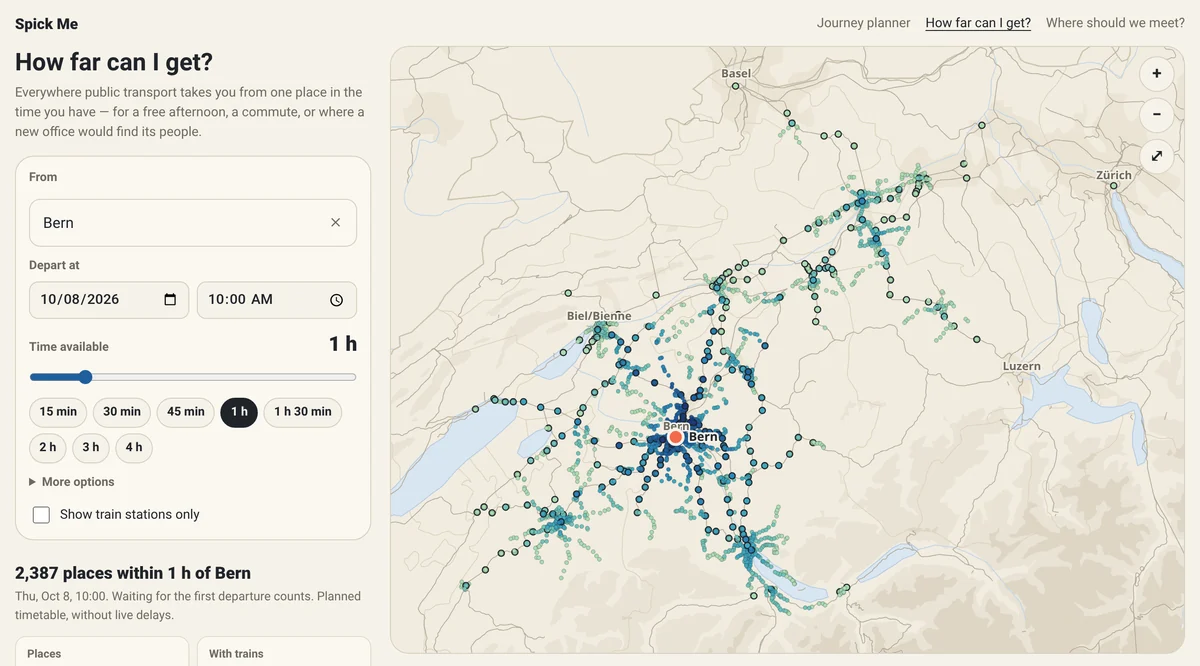
Everywhere you can reach in an hour, on a map — and the fairest place to meet somebody who starts somewhere else.
Android · debug build · 2026-10-08 — Web · Chromium · 2026-10-08
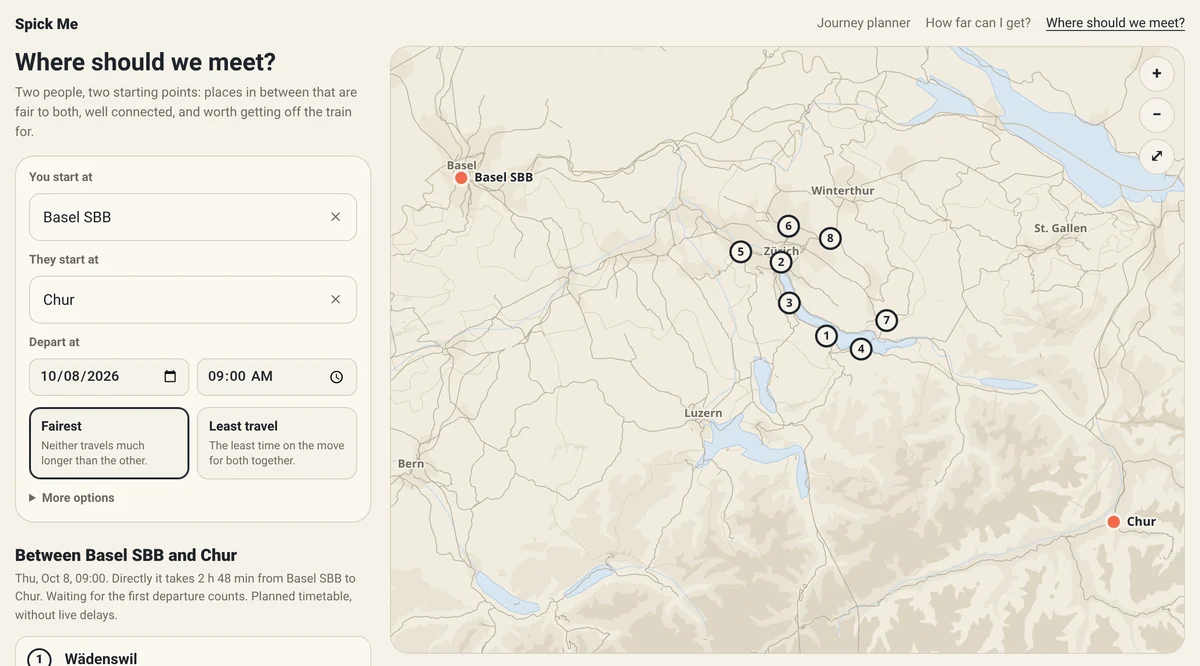
Two starting points, and the places in between that are fair to both — with how long each of you travels.
Web · Chromium · 2026-10-08
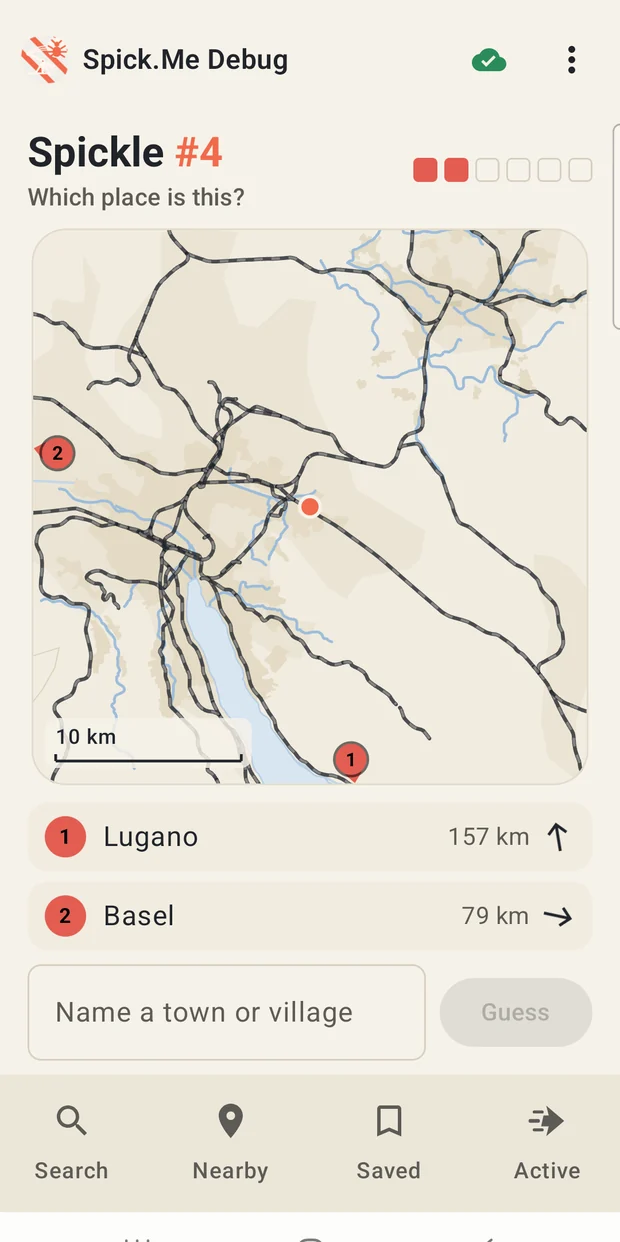
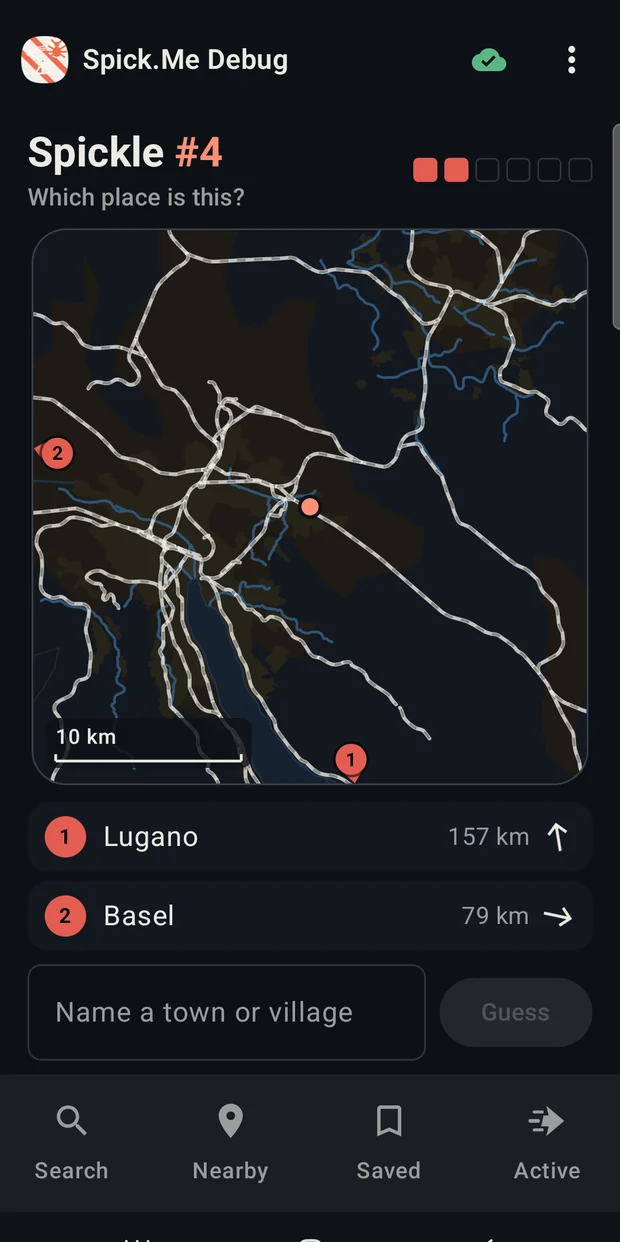
A square of map with no names on it and a dot on a station. Six guesses, each telling you how far off you are and in which direction — then a trip there.
Android · debug build · 2026-10-08
The same offline planner as the phone, for Linux, macOS and Windows. The timetable is downloaded once; every search after that is answered on the machine.
Linux · 2026-10-06
German, French, Italian, Romansh, Spanish, English — and seven Swiss German dialects. You may be reading one now.
Web · 2026-09-08
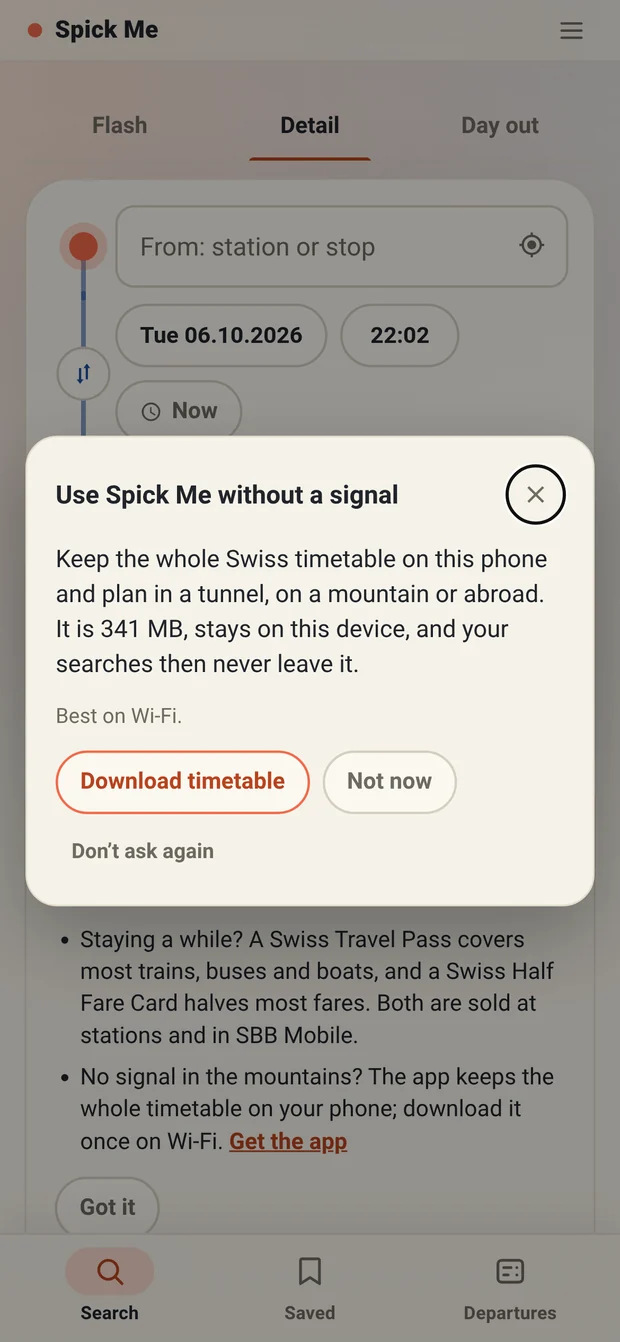
Nothing to install. On your home screen, it keeps the whole timetable on the phone.
Web · Chromium · 2026-10-06
A connection travels as a link, with the whole journey inside it. Whoever opens it needs no app — and reads it in their own language.
Web · 2026-09-08
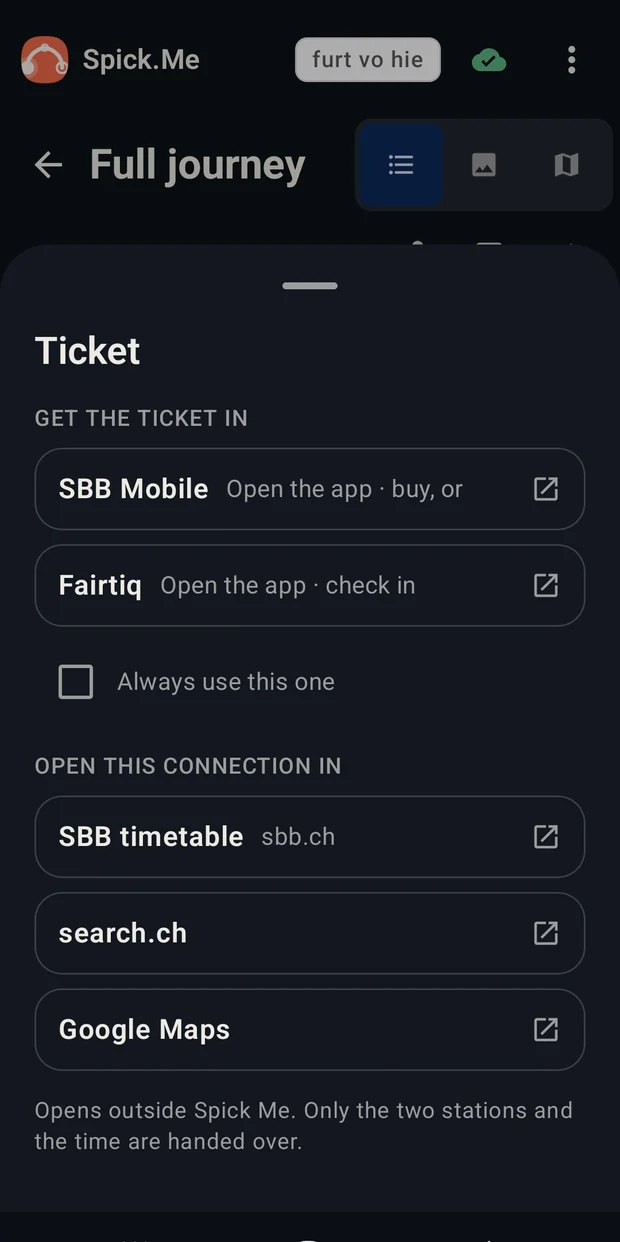
We sell nothing. When the journey is settled, hand it over to the app that does — SBB Mobile, Fairtiq, ÖBB, Deutsche Bahn, search.ch — already filled in.
Android · 2026-09-08
Enough to get you to the platform, and little else. Everything here works today.
Search from an address, or to one. The walk at either end is part of the answer.
Every journey you followed, counted on the device: how far, how punctual, which trains.
Eight ways in, one Rust engine — on your device, or on our server for the browser and your AI assistant.
No account, no profile, no tracking. Searches are answered and not stored.
Timetables, delays and carriage data come from Switzerland’s open transport data — passed on as received.
Every feature here exists because somebody asked for it. Every idea is read by a person.